Local Marketing Strategies That Help Food Trucks Build Loyal Customer Communities
The food truck industry has grown into one of the most dynamic parts of the food service business. What began as a convenient way to serve quick meals has evolved into a thriving industry known for creativity, unique menus, and strong connections with local communities. Food trucks now appear at festivals, farmers’ markets, office districts, sporting events, neighbourhood gatherings, and private functions, offering customers a dining experience that combines quality food with convenience and personality.
Food trucks are not stationary like most traditional restaurants. Visibility and relationships play a critical role in ensuring that food trucks thrive in the food industry. As much as food truck owners strive to ensure that their food is of high quality, they need to make sure that people can locate them easily and also have a reason to come back again. Good food truck owners should realize that local marketing goes beyond getting customers who visit their trucks for the first time. Food trucks require loyal customers, who would be willing to spread the word.
Good local relationships can help food trucks get an edge against their competitors. They can also provide constant customer demand throughout the year. To achieve that, food truck owners need to be aware of food truck industry trends and implement effective marketing strategies for food trucks locally. Also, they can utilize social media marketing for food trucks.
Why Community Matters More Than Advertising | Local Marketing Strategies
Advertising is indeed effective in generating awareness, but the success of local businesses comes from building relationships rather than heavy marketing spends. For example, food trucks thrive on loyal customers who will pay attention to their schedule, refer them to their friends, and keep coming back to them.
Engagement with the community builds trust and provides reasons for choosing one food truck over another. It may even be equally, if not more, important than the quality of food offered.
Community relationship-based marketing concepts work great for successful food trucks.
Understanding Your Local Audience
Every community has different preferences, eating habits, and event calendars. A business district may attract office workers seeking quick lunches, while residential neighbourhoods may generate evening family traffic. Weekend markets often attract customers interested in locally produced food and unique dining experiences.
Understanding these local patterns helps owners select suitable locations, operating hours, and promotional activities aligned with customer behaviour.
Recognising local preferences supports more effective local food truck promotion throughout the year.
Build a Consistent Brand Identity
Your customers need to recognize your food truck regardless of whether they come across it in an event, through social media, or when it is located in a neighborhood. Branding involves such aspects as vehicle appearance, menu appearance, uniforms, packaging, photos, and communication style.
Good branding makes it easy for your customers to recognize your business and builds up their loyalty due to recognition.
Good branding reflects current trends in the food truck industry.
Keep Your Schedule Predictable
One of the issues that food trucks face is informing their customers on how to locate them. Although flexibility is one of the benefits of being in a food truck, uncertainty may limit the chances of repeat business.
Being consistent in having your location fixed each week coupled with clear events calendars will help your customers prepare for future visits. Consistency facilitates regular buying.
Consistent communication promotes local food truck marketing since it makes your business more accessible.
Make Social Media Part of Daily Operations
Social media has become one of the most valuable marketing tools available to food truck owners. Customers frequently check platforms before visiting to confirm locations, menus, opening hours, and special offers.
Posting consistently keeps followers informed while maintaining regular engagement between visits. Behind-the-scenes content, menu updates, event announcements, and customer interactions all help strengthen online communities.
Effective social media for food trucks extends customer relationships beyond individual purchases.
Tell Stories, Not Just Promotions
Many businesses use social media only to advertise discounts or daily menus. While promotional posts remain valuable, customers often connect more strongly with authentic stories about the people behind the business.
Sharing the inspiration behind recipes, introducing team members, highlighting community events, or celebrating customer milestones creates emotional connections that encourage loyalty.
Storytelling complements practical food truck marketing ideas by building stronger customer relationships.
Participate in Community Events
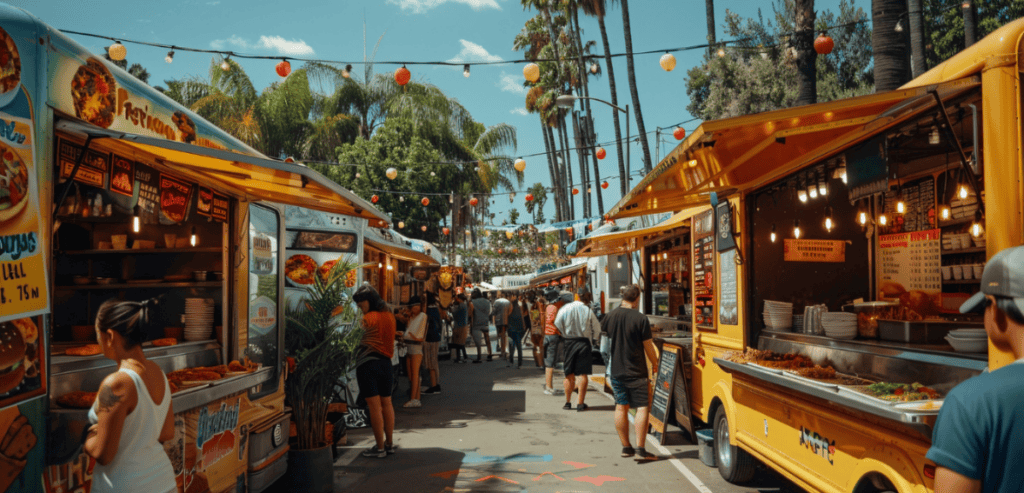
Community festivals, charity events, school activities, local markets, and neighbourhood celebrations provide valuable opportunities for food trucks to reach new audiences while supporting local organisations.
Participating consistently helps businesses become familiar parts of community life rather than occasional visitors. These relationships often generate repeat business throughout the year.
Regular event participation strengthens local food truck promotion through genuine community involvement.
Encourage Word-of-Mouth Recommendations
Satisfied customers remain one of the most effective marketing resources available to any food truck. Positive recommendations from friends, family members, colleagues, and neighbours often influence purchasing decisions more strongly than traditional advertising.
Excellent service, memorable food, and friendly interactions naturally encourage people to recommend your business to others.
Many current food truck industry trends continue highlighting the importance of customer advocacy.
Reward Returning Customers
Loyal customers deserve recognition. Simple loyalty cards, digital rewards, birthday offers, referral programmes, or exclusive menu previews encourage repeat visits without requiring complex marketing campaigns.
Rewards should make customers feel appreciated rather than simply offering discounts. Recognition strengthens long-term relationships while increasing repeat purchases.
Customer appreciation supports many successful food truck marketing ideas.
Build Relationships With Local Businesses
Office buildings, breweries, shopping centres, community organisations, schools, and recreational facilities often welcome food truck partnerships. Regular appearances at established locations provide consistent customer traffic while expanding local visibility.
These partnerships benefit both businesses by increasing customer engagement and supporting local economic activity.
Collaborative efforts enhance local food truck promotion through mutually beneficial relationships.
Collect Customer Feedback
Listening to customers helps food truck owners improve menus, service, scheduling, pricing, and marketing strategies. Simple conversations, online reviews, surveys, or social media interactions often provide valuable operational insights.
Customers also appreciate businesses that genuinely consider their opinions when making improvements.
Customer feedback contributes to evolving food truck industry trends focused on continuous improvement.
Create Shareable Experiences
Customers increasingly enjoy sharing dining experiences through photographs, videos, and social media posts. Attractive food presentation, creative packaging, colourful truck designs, and memorable branding encourage customers to create user-generated content.
Every shared photograph introduces the business to additional potential customers within local communities.
Visual experiences strengthen social media for food trucks without requiring significant advertising investment.
Stay Active Between Events
Food trucks sometimes experience gaps between major festivals or seasonal events. Maintaining communication during quieter periods helps preserve customer engagement until regular operations resume.
Sharing preparation activities, menu development, upcoming schedules, or community involvement keeps followers interested even when the truck is not operating daily.
Ongoing communication supports consistent local food truck promotion throughout the year.

Focus on Customer Experience
Great food attracts customers initially, but positive experiences encourage them to return. Friendly service, efficient ordering, accurate preparation, clean presentation, and genuine appreciation all influence customer loyalty.
Every interaction contributes to how customers remember your business. Small details often leave lasting impressions that differentiate food trucks from competitors.
Customer service remains central to successful food truck marketing ideas.
Use Reviews to Build Credibility
Online reviews help potential customers evaluate food trucks before making purchasing decisions. Encouraging satisfied customers to leave honest reviews improves online visibility while strengthening business credibility.
Responding professionally to both positive and constructive feedback demonstrates commitment to customer satisfaction.
Review management complements social media for food trucks by strengthening digital reputation.
Keep Adapting to Local Preferences
Communities change over time. New neighbourhoods develop, event calendars evolve, customer preferences shift, and local competition increases. Successful food truck owners regularly evaluate their marketing strategies while remaining responsive to community needs.
Flexibility allows businesses to identify new opportunities without abandoning the relationships they have already built.
Continuous improvement reflects many current food truck industry trends.
Looking Toward the Future
Technology, digital payments, online ordering, loyalty programmes, location tracking, and social media will continue shaping how food trucks connect with customers. While marketing tools evolve, community relationships will remain essential for long-term success.
Businesses combining excellent food with authentic engagement and consistent communication will continue building loyal customer communities regardless of changing technology.
Future local food truck promotion will increasingly blend digital convenience with personal local connections.
Conclusion
Success in operating a food truck business takes a lot more than offering good products. In order for a food truck to have long-lasting success, its owners should create strong connections with customers in the area who will return again and again, share information about the business and become dedicated fans of the brand in their communities. Advertising might bring some new customers, but loyalty comes with good services and authentic interaction, active participation in the community and creating unique customer experience.
Knowing the latest food truck industry trends, using smart food truck marketing strategies, promoting the business locally and having an active social media profile for the food truck helps to build communities of loyal customers rather than just attract one-time visitors.
In general, the best food truck business not only serves delicious meals but becomes known by the way of connecting with the community.